Book direct from the host·Hosts keep 100%·No commission, no feesBook direct · Hosts keep 100% · No fees

0 properties available
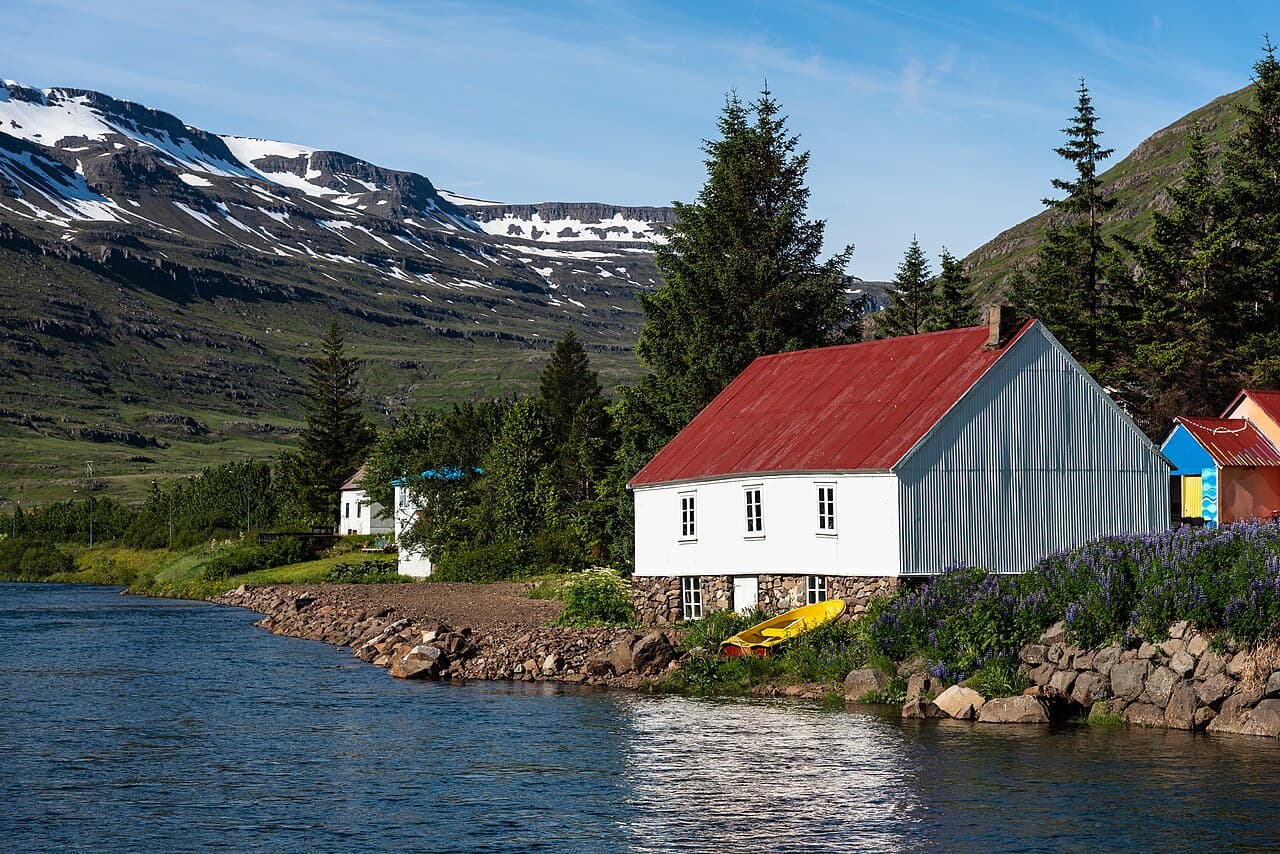
East Iceland is the quietest part of the country and gets the most sunshine. The eastern fjords run from Berufjörður in the south up to Borgarfjörður Eystri in the north, around 120 km of coastline, and the Ring Road threads inland through Egilsstaðir before dropping back to the coast at Höfn. The pace here is genuinely different from the south. Houses sit at the heads of fjords, the towns are 100 to 700 people each, and you can drive for an hour without passing another car in winter.
There is no Diamond Circle or Golden Circle in the east. The pleasure is the drive itself, and a string of specific stops:
The east is the only part of Iceland with wild reindeer, which were introduced from Norway in the 1700s and spread no further than the eastern fjords. From October through April they descend from the highlands toward the valleys and are visible from the Ring Road, especially between Egilsstaðir and Höfn. Summer is the off-season for sightings; the herds head into the highland plateau north of Vatnajökull. There is also a small reindeer rescue park in Fellabær (next to Egilsstaðir) if you want a guaranteed close-up.
Egilsstaðir is the inland hub: largest town in the east, an airport with regular flights from Reykjavík, the best supermarket selection, and a sensible base for the lake, the forest, Vök Baths, Hengifoss, and Stuðlagil within an hour. Most "east Iceland" trips work outward from here.
For the fjord coast, Reyðarfjörður (the east's longest fjord, around 30 km) and Seyðisfjörður (the painted town) are both within an hour of Egilsstaðir over the mountain pass. Smaller villages such as Fáskrúðsfjörður, Stöðvarfjörður, and Breiðdalsvík are quieter still and put you on the open coast for sea light and weather.
For Stokksnes, base in or around Höfn, which is technically the eastern edge of South Iceland but practically a southern entry point to the eastern fjords.
Late June through early September is the easiest. The fjord roads are open, the daylight is long, and the weather is the country's most reliable. The trade-off is that the reindeer are mostly out of sight.
October through April brings reindeer down to the road, the aurora into the sky, and snow onto the passes. The Ring Road is plowed and stays open in normal conditions, but the fjord-to-fjord mountain roads (Oddsskarð, Fjarðarheiði, Öxi) close at short notice in winter. Plan your base accordingly: a house deep in a single fjord may strand you for a day.
Treating the east as a "drive-through" between the south coast and the north. The drive from Höfn to Egilsstaðir is around 3 hours of fjord-hugging road, and at minimum two of the stops above (Stokksnes and Stuðlagil) deserve their own half-days. Plan for two nights here at the very least; three is better.
We don't have houses in East Iceland yet.
Browse all housesThe named places worth driving to from a summerhouse base.
Iceland's most remarkable basalt column canyon, revealed only in recent years after a nearby dam reduced water levels. The milky blue-green river running through it is extraordinary.
A dramatic black-sand beach backed by the jagged peaks of Vestrahorn mountain. One of Iceland's most spectacular and surreal landscapes.
Iceland's third-highest waterfall at 128 metres, framed by striking red and black banded basalt cliffs. The 2.5 km hike from the car park passes Litlanesfoss with its hexagonal columns en route.
Practical bases for fuel, groceries, and a swim.